
Coffee in Different Languages: How to Order Coffee Around the World
(Full Disclosure)
If you’re a coffee lover traveling the world, knowing how to order coffee in different languages can make your experience even richer.
Do you find yourself standing in a cozy café abroad, nervously wondering how to order your favorite drink?
I’ve been there!
If you’re a seasoned traveler or just starting to explore the world, knowing how to say coffee in different languages can turn an awkward moment into a joyful connection.
Plus, native speakers appreciate when you try to speak their language.
As a lifelong language lover who spent years learning French and Italian, and a former barista who’s ordered coffee in numerous countries, I get how intimidating and exciting it can feel.
In this guide, you’ll not only learn how to say ‘coffee’ in different languages but also get easy pronunciation tips (like ‘ka-FEH’ for Portuguese) to sound like a local.
Ready to feel confident (and caffeinated) wherever you go?
Let’s dive into the essential phrases you’ll want to keep in your back pocket!
Coffee Phrases for World Travelers
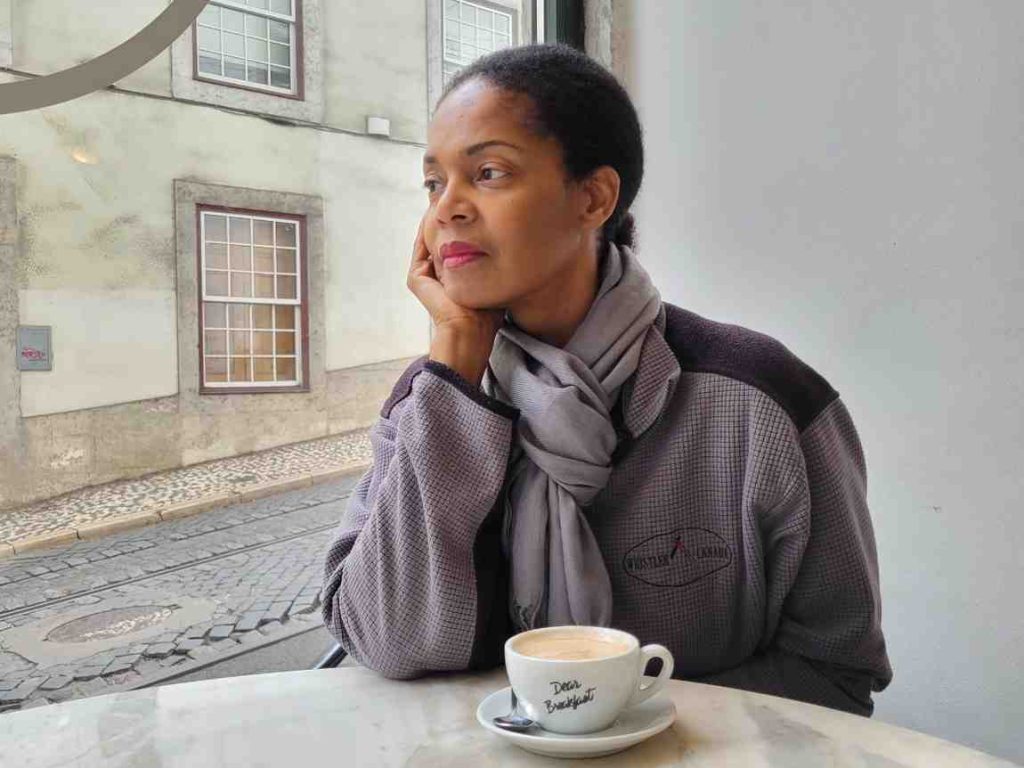
Imagine confidently ordering “un caffè” in Italy or charming a Parisian barista with a perfectly pronounced “un café, s’il vous plaît.”
Cool, right?
This isn’t just about avoiding awkward pointing at menu boards (though that’s a bonus). It’s about diving headfirst into the awesome world of global coffee culture using the native language!
On one of your next coffee breaks, you can get off on the right foot by learning how to order coffee drinks like native speakers.
We’ve listed it in the English language and literal translations for other parts of the world, along with some variations.
| Language | How to Say It | Phonetic Pronunciation |
|---|---|---|
| 🇬🇧 English | A coffee, please | uh KOF-ee, pleez |
| 🇵🇹 Portuguese | Um café, por favor | oom ka-FEH, por fa-VOR |
| 🇬🇷 Greek | Έναν καφέ, παρακαλώ | E-nan ka-FE, pa-ra-ka-LO |
| 🇪🇸 Spanish | Un café, por favor | oon ka-FEH, por fa-VOR |
| 🇩🇪 German | Einen Kaffee, bitte | AY-nen kaf-FEE, BI-tuh |
| 🇹🇷 Turkish | Bir kahve lütfen | beer kah-VEH LOOT-fen |
| 🇸🇦 Arabic | قهوة من فضلك (Qahwa min fadlak) | KAH-wa min FAD-lak |
| 🇯🇵 Japanese | コーヒーをください (Kōhī o kudasai) | KOH-hee oh koo-da-sai |
| 🇰🇷 Korean | 커피 주세요 (Keopi juseyo) | KUH-pi ju-se-yo |
| 🇮🇹 Italian | Un caffè, per favore | oon kaf-FEH, per fa-VOH-reh |
| 🇨🇳 Mandarin Chinese | 请给我一杯咖啡 (Qǐng gěi wǒ yī bēi kāfēi) | ching gey woh yee bay ka-fay |
| 🇻🇳 Vietnamese | Một cà phê, làm ơn | mot ka fe, lam un |
| 🇷🇺 Russian | Кофе, пожалуйста (Kofe, pozhaluysta) | KO-fe, pa-ZHAL-sta |
| 🇸🇪 Swedish | En kaffe, tack | en KAF-fe, tak |
| 🇵🇱 Polish | Poproszę kawę | po-PRO-she KA-ve |
| 🇳🇱 Dutch | Een koffie, alstublieft | ayn KOF-fee, al-stoo-BLEEFT |
| 🇫🇷 French | Un café, s’il vous plaît | uhn ka-FEY, seel voo PLEH |
| 🇮🇳 Hindi | एक कॉफ़ी, कृपया (Ek coffee, kripya) | ek KO-fee, KRIP-ya |
| 🇹🇭 Thai | กาแฟหนึ่งแก้ว (Kaafae neung kaew) | ka-fae nung kae-o |
| 🇰🇪 Swahili (Kenya) | Kahawa moja, tafadhali | ka-HA-wa MO-ja, ta-fa-DA-li |
| 🇺🇸 Hawaiian (USA) | He kope, ke ʻoluʻolu | hey KO-peh, keh oh-lu-OH-lu |
Cultural Notes
Use these culture notes from my travels!
In German, you can ask “Können Sie mir einen Kaffee empfehlen?”, which means “Can you recommend a coffee to me”? It’s a nice way to engage with locals and potentially discover local coffee specialties.
In Italy, ordering “caffè” means espresso, not drip coffee. Italians normally drink a single shot of espresso, which is much stronger than regular coffee. They don’t linger in the coffee shop and savor every sip. It’s normally consumed while standing and quickly.
To add a bit of pleasantry, say “Je voudrais un caffè, s’il vous plaît”, which means “I would like a coffee, please”. When in Paris, locals love to linger in a French cafe and drink coffee paired with a sweet pastry while people watching. If you prefer coffee with milk, say “café au lait”.
In Japan, politeness is key. Coffee culture is as much about manners as it is about the drink itself. When ordering coffee, bow slightly and use polite language. Also, don’t expect to walk around with your coffee — most people enjoy it while seated, either inside the café or on a designated bench.
Ordering coffee in a native language is like a secret code that unlocks amazing café experiences around the world.
Every year, lift your hot cup of coffee in honor of International Coffee Day by learning a new phrase.
Slang Terms for Coffee
These terms often reflect the cultural relationship Americans have with coffee, as a daily ritual, a productivity booster, or simply a comforting habit.
Joe / Cup of Joe – The most well-known slang for coffee. Short for “a cup of coffee.”
Java – A classic term referring to coffee beans from the island of Java, Indonesia.
Brew – A casual way to refer to coffee, especially when it’s home-brewed.
Cuppa – Short for “cup of,” often used for coffee or tea.
Mud – Refers to strong, thick, or gritty coffee.
Go Juice – A playful term for coffee as a morning energy boost.
Rocket Fuel – Slang for extra-strong coffee.
Bean Juice – A literal and humorous way to describe coffee.
Wake-Up Juice – Emphasizes coffee’s role in getting you going.
Black Gold – A nickname for premium or strong black coffee.
Brain Juice – A nod to coffee’s role in waking up your mind.
Perk – From “percolated coffee”, also a play on “perks you up.”
Liquid Energy – Refers to the caffeine boost in coffee.
Hot Stuff – A flirty or cheeky way to refer to hot coffee.
Sign Language for Coffee
To create the word coffee in American Sign Language, use both hands and a motion.
- Left hand: Forms a fist (representing the coffee grinder base)
- Right hand: Also forms a fist. Place one fist on top of the other and make a circular grinding motion.
- Motion: The right hand rotates as if grinding coffee beans
This sign mimics the action of using an old-fashioned coffee grinder, which is why both hands form fists and the dominant hand (right) makes the grinding motion on top of the non-dominant hand (left).
Global Facts About Coffee
The consumption of coffee continues to grow in popularity in the United States. Since its origins in the Middle East, coffee spread to Europe in the 17th century and gained global popularity by the 18th century.
It’s interesting to note that countries have regional variations of coffee. For example, in Central and South America, you can find full-bodied, chocolatey flavors in Brazil, smooth and nutty tastes in Colombia, or spicy notes in Peru.
However, South Africa doesn’t have varieties unique to the region. They create unique shots of espresso by combining coffee beans from various parts of Africa to create a good cup of coffee.
A unique aspect of Turkish coffee culture is the practice of fortune telling. The coffee grounds left in the cup are read to determine the destiny of those who drink from it.
Turkish coffee (or türk kahvesi) is known for its strong, rich flavor and thick texture. So if you add this to your bucket list, you might need to add a bit of sugar.
Final Thoughts on Ordering Coffee in Different Languages
Discovering the best place to enjoy coffee around the world is more than just finding exceptional service or the perfect espresso shot.
It’s about immersing yourself in the local coffee culture and language learning experience.
From the coffee plant to the cup, each region offers a unique journey.
In Mexico, you might savor a spicy café de olla, while in Italy, you’ll learn the difference between a single and a double shot.
The coffee berries transform into the beans we know and love. Whether you prefer a strong black coffee in the morning, a creamy latte with hot milk and milk foam, or a refreshing iced coffee for a pick-me-up, there’s a style of coffee for everyone.
Learning to order these drinks in the local language is a better way to connect with the culture and might even lead you to discover new favorites you never knew existed!
So grab your favorite mug, and let’s explore how a simple “coffee, please” can sound so different – and so amazing – all over the world! It’s a fun way to start learning new languages.
What has been your favorite beverage or coffee experience in other countries?
Follow our MSN channel for a daily dose of caffeinated content and subscribe to monthly newsletters!
