
How to Make Café Con Leche: An Authentic Spanish Coffee Recipe
(Full Disclosure)
Wondering how to make café con leche that tastes just like the smooth, comforting cup you’d find in a cozy Spanish café?
You’re not alone.
As a fellow coffee lover, I know the frustration of trying to recreate that rich, creamy flavor at home—only to end up with something flat or too bitter.
After years of travel (and a few too many mediocre brews), I finally learned the simple, authentic method from locals in Madrid. And I’m excited to share it with you.
Whether you’re a curious sipper or a full-blown coffee enthusiast, this guide will walk you through every step.
Ready to make your mornings a little more magical?
Let’s get brewing.
Cafe con Leche Recipe
Cafe con leche is a popular coffee drink that originated in Puerto Rico and is now enjoyed all around the world.
The drink is made with strongly brewed coffee and steamed milk, creating a rich and creamy texture that is perfect for a breakfast or afternoon treat.
The coffee is typically brewed using a stovetop espresso maker or a French press.
The milk is heated and steamed until it becomes frothy and creamy, then added to the brewed coffee to create a perfect balance of flavors.
Cafe con leche is often served with a sweet pastry or bread, such as a mallorca or a sweet bread roll.
The drink is a staple in Puerto Rican cuisine and is enjoyed by locals and tourists.
It is a must-try for coffee lovers looking for a rich and creamy coffee experience.

Cafe con Leche
Difficulty: easy1
servings15
minutes150
kcalIngredients
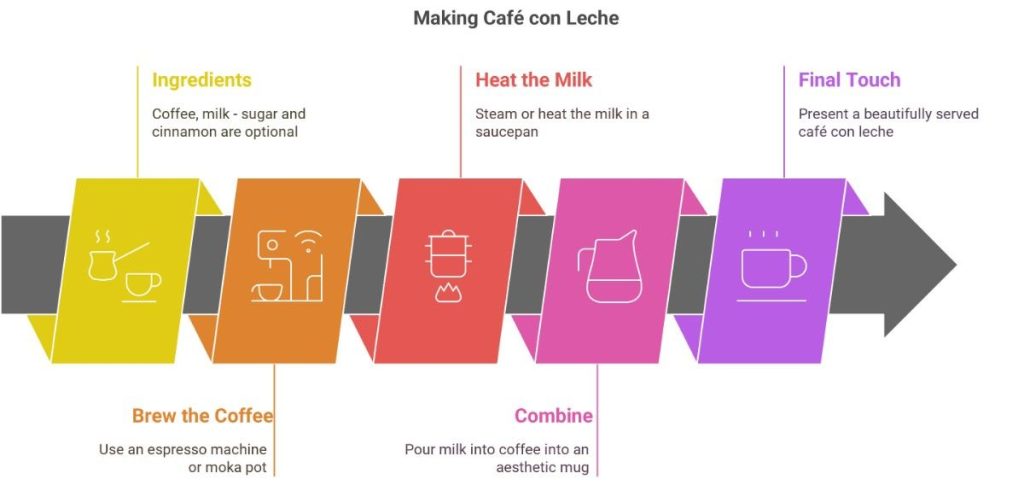
1 cup of strongly brewed coffee
1 cup of whole milk
1-2 tablespoons of sugar (optional)
Cinnamon or nutmeg for garnish (optional)
Directions
- Brew a cup of strong coffee using a stovetop espresso maker or French press.
- Heat the milk in a small saucepan over low to medium heat until steamed.
- Use a milk frother or whisk to froth the milk until it becomes creamy and frothy.
- Pour the brewed coffee into a mug.
- Add the frothed milk to the coffee, pouring it slowly to create layers.
- Add sugar to taste, if desired.
Sprinkle cinnamon or nutmeg on top for garnish, if desired.
Notes
- For a stronger coffee flavor, you can use more coffee and less milk.
- For a sweeter drink, you can add more sugar. Each tablespoon of sugar is an additional 50 calories.
Tips for the Perfect Ratio and Texture
Getting the ratio right is key to making a café con leche that hits the spot. Here’s what to keep in mind:
- Classic Ratio: 1:1 ratio of espresso to steamed milk.
- Stronger Coffee Flavor? Use a 2:1 coffee-to-milk ratio.
- Creamier Texture? Froth the milk lightly instead of steaming it.
- No Espresso Machine? Brew a strong cup of coffee using a moka pot, French press, or Aeropress.
✨ Pro Tip: Use whole milk for a richer café-style experience. Oat milk also works well if you prefer plant-based options.
Regional Variations of Café Con Leche
Café con leche may have Spanish roots, but it’s made in slightly different ways for coffee around the world. Understanding these variations adds cultural richness to your cup.
- Spain: Traditionally made with equal parts strongly brewed coffee (often espresso) and steamed milk. It is commonly served at breakfast.
- Cuba: Known for being much sweeter. Often made with Cuban espresso and sugar whipped into a frothy paste before adding hot milk.
- Puerto Rico: Uses strong brewed coffee and scalded milk, sometimes with a pinch of salt or cinnamon.
- Philippines: Locally known as “kape’t gatas,” it features instant coffee or brewed barako with hot milk.
Final Thoughts on How to Make Café Con Leche
In conclusion, café con leche is a beloved coffee tradition that transcends borders, bringing together the simple yet perfect marriage of strong coffee and creamy milk.
Whether enjoyed in its birthplace of Puerto Rico, adapted with regional flair in Spain, Cuba, or the Philippines, or prepared in your kitchen, this versatile beverage offers comfort and satisfaction with every sip.
The beauty of café con leche lies in its accessibility—you can achieve barista-worthy results at home with basic equipment and a tiny bit of attention to technique.
Try making your own using the tips provided, and discover why this classic coffee preparation has stood the test of time. It’s much easier to make than you think!
Follow our MSN channel for another dose of caffeinated content, and subscribe to the Perky Press newsletter!
Follow our MSN channel for another dose of caffeinated content, and subscribe to the Perky Press newsletter!
