
The History of Coffee: From Ancient Ethiopia to Global Culture
(Full Disclosure)
Ever wondered about the fascinating journey your morning brew took through the centuries before landing in your cup?
As a coffee lover, you’ve savored countless varieties, but the rich history of coffee remains a mystery to many enthusiasts like yourself.
Having spent over a decade drinking java and then spending some time researching coffee’s origins while touring with roasters across two continents, I’ve uncovered the captivating story of how a humble berry from Ethiopia transformed global culture.
Whether you’re a casual sipper or a dedicated aficionado, this deep dive into coffee’s remarkable past will enhance your appreciation for every aromatic cup.
Grab a mug and sip while discovering the surprising twists, legendary tales, and cultural revolutions throughout human history.
The Timeline of Coffee
The Mythical Beginnings of Coffee
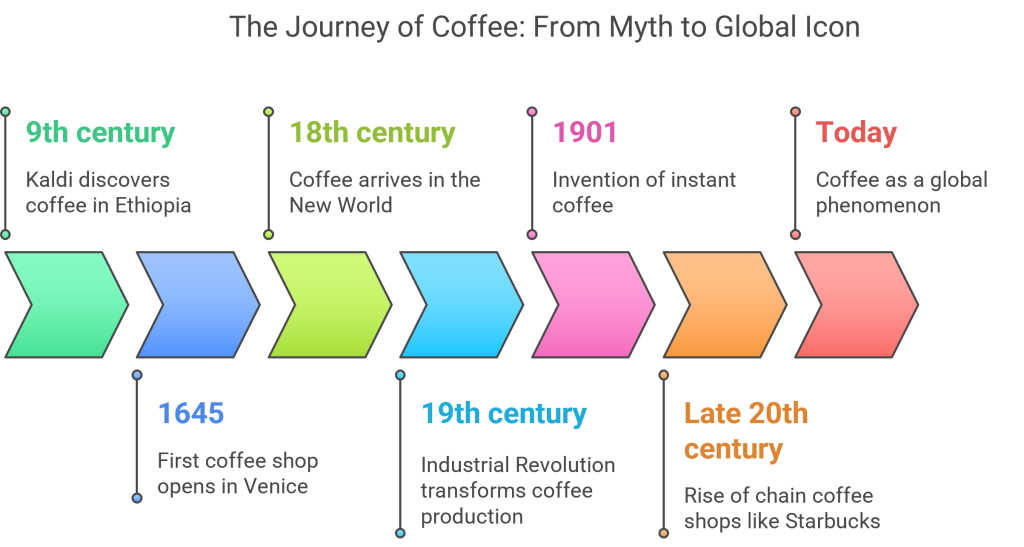
The story of coffee begins in Ethiopia, where legend has it that a young goat herder named Kaldi discovered the energizing effects of coffee.
According to the legend, Kaldi noticed that his goats became unusually lively after eating the cherries from a specific tree. He decided to try the fruit himself and felt a surge of energy. Kaldi shared his discovery with the local monks, who used it to stay awake during long prayer sessions.
Coffee Spreads Across the Arabian Peninsula
From Ethiopia, coffee made its way to the Arabian Peninsula, where it became a staple beverage among the nomadic tribes.
The Arabs were the first to roast and brew coffee, and they developed a sophisticated coffee culture that included coffee houses, where people would gather to drink coffee, socialize, and exchange ideas.
Coffee Comes to Europe
The first coffee shop in Europe opened in Venice in 1645, and coffee quickly became a popular drink among the wealthy and intellectual classes.
Coffeehouses spread across Europe and became hubs of culture and innovation where artists, writers, and thinkers would gather to exchange ideas and debate.
Coffee in the New World
Coffee arrived in the New World in the early 18th century, brought by European colonists who planted coffee trees in the Caribbean and South America.
The beans quickly became a lucrative crop, and they played a significant role in the development of colonial economies.
The Industrial Revolution and Coffee
The 19th century saw the rise of the Industrial Revolution, which brought about significant changes in the way coffee was produced and consumed.
Coffee production became mechanized, and new technologies made it easier to transport and store.
It also became more affordable and accessible to the masses, and it became a symbol of the emerging middle class.
Coffee in the 20th Century
The 20th century was a period of great innovation and transformation in the coffee industry. Instant coffee was invented in 1901 and quickly became a popular drink among busy urbanites.
The rise of chain coffee shops, such as Starbucks, in the late 20th century brought about a new era of coffee culture, where coffee became a lifestyle and a status symbol.
Coffee Today: A Global Phenomenon
Today, coffee is one of the most popular beverages in the world, with over 2 billion cups consumed every day. It has become a global phenomenon, with different regions and cultures developing their unique coffee traditions and styles.
Long after the journey of coffee began, coffee lovers have increasingly sought out ethically sourced beans, supporting fair trade practices and paying attention to the environmental impact of coffee farming. Innovations like compostable pods, shade-grown coffee, and zero-waste cafes are helping to shape a more responsible industry. These modern developments reflect a growing awareness that great coffee isn’t just about taste—it’s also about people, planet, and purpose.
From the strong and bold espresso of Italy to the sweet and creamy café con leche of Latin America, coffee is an acquired taste, but it’s not for everyone.
The Cultural Impact of Coffee
Beyond its role as a morning pick-me-up, coffee has played a significant part in shaping social and cultural traditions around the world.
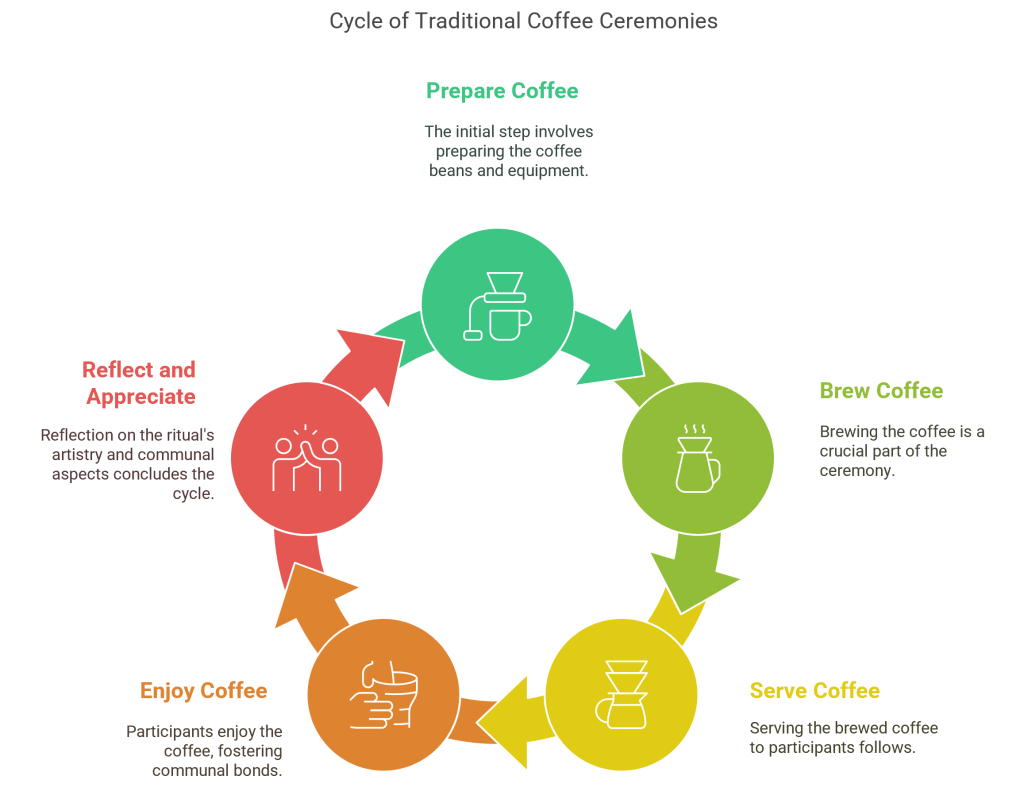
Early coffeehouses in the Middle East, known as qahveh khaneh, became vibrant centers for conversation, music, and political debate.
In Europe, coffee fueled intellectual exchange during the Enlightenment, with cafes earning the nickname “penny universities” because of the stimulating discussions they offered for the price of a cup.
Many enthusiasts deepen their appreciation by taking an online coffee quiz to discover their preferred flavor profiles and brewing methods.
Today, coffee continues to be a global unifier. Whether it’s Italy’s espresso culture, Sweden’s fika tradition, or the third-wave coffee movement in the United States, each ritual reflects a deeper connection to community, creativity, and conversation.
Understanding coffee’s cultural legacy helps us appreciate why this humble bean holds such a prominent place in societies across the globe.
Final Thoughts on the History of Coffee
In conclusion, the history of coffee is a story of discovery, innovation, and transformation.
From its mythical origins in Ethiopia to its global popularity today, coffee has played a significant role in shaping human culture and society.
Whether you enjoy your coffee black, with milk and sugar, or with a fancy latte art design, one thing is clear: coffee is here to stay.
Follow our MSN channel for another dose of caffeinated content, and subscribe to our monthly newsletters!
