
Italian Coffee Maker vs French Press: Which Brews the Best Cup?
(Full Disclosure)
Trying to decide between an Italian coffee maker vs a French press for your morning brew? Join the club.
For a coffee lover, it can be overwhelming to choose the right tool when both promise rich, bold flavor but deliver it in very different ways.
I’ve spent some time reading about and experimenting with coffee makers from Moka pots to pour-overs and have learned firsthand how each brewing method affects taste, texture, and convenience.
If you enjoy coffee rituals and want to find the best fit for your lifestyle (and taste buds), you’re in the right place.
In this post, I’ll break down the pros, cons, and flavor profiles of both methods, so you can confidently pick your perfect brew companion.
Understanding Italian Coffee Makers
Imagine waking up to the aroma of a freshly brewed moka pot coffee made in your stovetop espresso maker.
It’s quick, easy, and delivers a bold coffee kick to start your day.
The brew method involves filling the lower chamber with cold water, adding coffee grounds to the filter basket, and heating on the stove until the water boils and flows into the top chamber.
The result? A delicious, espresso-like coffee that’s perfect for a quick pick-me-up.
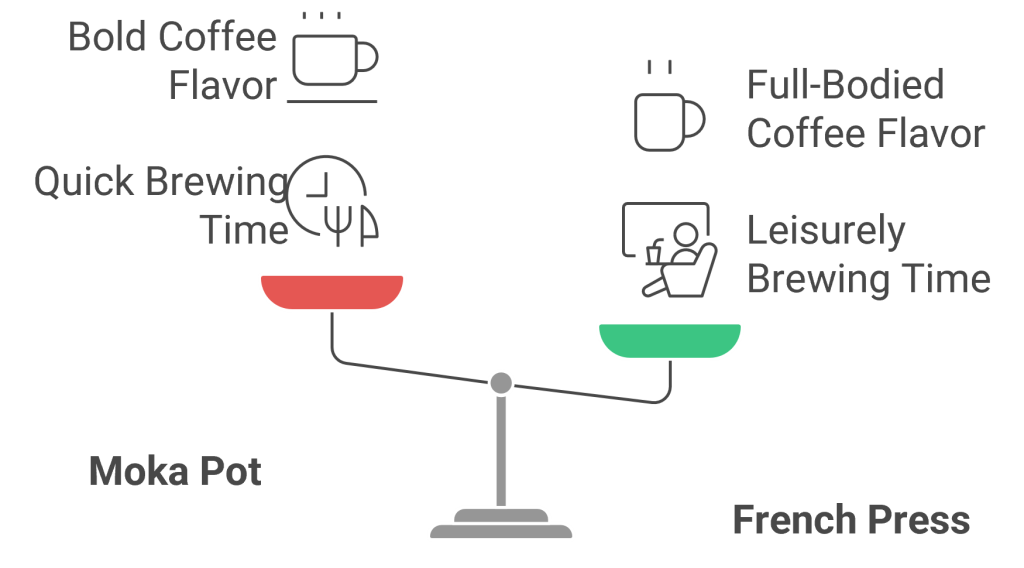
On the other hand, the French press method allows you to savor the full-bodied flavor of French press coffee with oils and rich flavors that linger in every sip.
Whether you’re using a glass carafe or a stainless steel model, French press coffee makers offer a brewing technique that’s both simple and satisfying.
Choosing between these two coffee brewers depends on your personal preference.
Do you crave a quick and bold coffee or a leisurely, full-bodied coffee experience?
Both methods have something special to offer, making this a fun debate among coffee enthusiasts.
History and Design of the Moka Pot
Stovetop espresso makers, especially the famous Moka pot, made their debut in the early 20th century. It was invented by Alfonso Bialetti in 1933.
The Moka pot quickly became popular for its ability to brew strong coffee on the stove.
The pot is typically made of aluminum or stainless steel, both durable materials.
Its design includes a safety valve to release pressure and prevent accidents, making it a safe choice for any kitchen.
The Basics of the Moka Pot
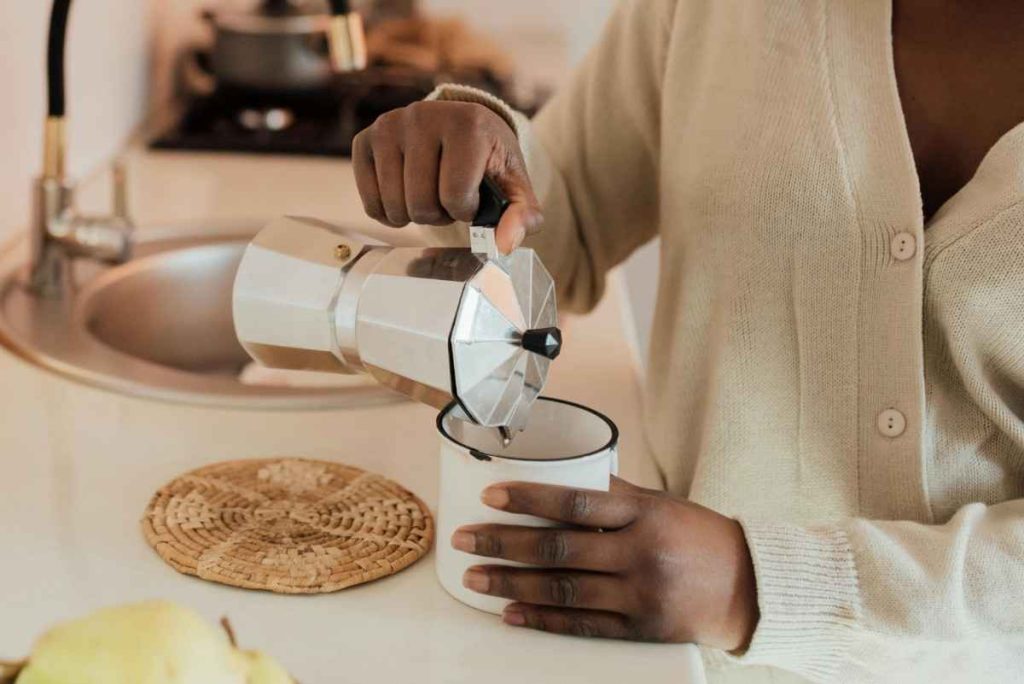
This affordable option for brewing espresso-like coffee features a simple yet elegant structure with three chambers: one for water, one for coffee grounds, and one for brewed coffee.
To use the moka pot, fill the bottom of the container with water, add coffee to the filter basket, and heat it.
In just a few minutes, you’ll have a delicious coffee that showcases the Italian passion for brewing.
Diving Into French Press Coffee
The French press, also known as a press pot, coffee press, or cafetière, dates back to the mid-19th century.
The first patent for a coffee pressing device was filed by Frenchmen Mayer and Delforge in 1852.
The modern French press design emerged in 1929 when Italian designer Attilio Calimani patented a version with a more effective filtering system.
Despite its name, the French press ironically owes much of its development to Italian designers, though its association with French coffee culture has remained.
Today, it’s recognized worldwide as one of the simplest yet most effective methods for brewing full-bodied coffee.
French press coffee makers are known for their rich flavor and simple process. Let’s see how it works and review some handy tips for getting the best cup.
The Basics of French Press
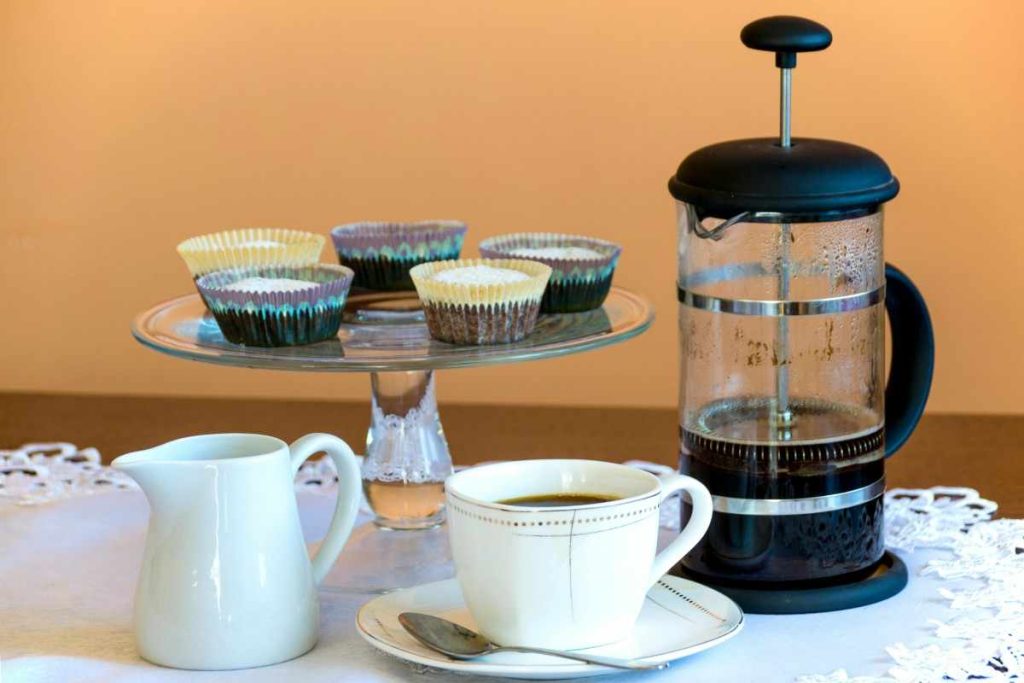
The French press, also called a press pot, is a device for brewing coffee that consists of a cylindrical glass carafe or stainless-steel carafe and a plunger with a filter.
To make good coffee, you need coarse coffee grounds and hot water at the right temperature.
A common ratio of coffee to water is 1:15, meaning for every part of coffee, you use 15 parts water. For example, use 30 grams of coffee (about 7 1/4 tsp) for 450 milliliters of water (about 2 cups).
Add the coffee to the carafe, pour hot water, and let it steep for about 4 minutes. After steeping, press down the plunger slowly in a circular motion.
This separates the grounds from the brewed coffee, leaving you with a rich coffee full of flavors.
French Press Technique and Tips
Using a French press is simple, but there are ways to improve your brew method for the best results.
- Preheat your press: Pour hot water into the carafe before adding coffee. This keeps your brew temperature steady.
- Use good-quality coffee: Fresh, whole beans give the best flavor. Grind them just before brewing for maximum freshness.
- Mind your steep time: If you let it steep too long, the coffee may taste bitter. Stick to around 4 minutes for the best results.
- Experiment with grind size: A coarser grind works well for the French press method, allowing the coffee to release its oils and flavors without over-extraction.
Enjoying French press coffee can be a fun and satisfying experience, making each cup something special.
It’s an excellent choice for those who appreciate a full-bodied coffee with a bit more time and attention.
Comparing Brewing Techniques
When choosing between an Italian coffee maker and a French press, you’ll notice some key differences in brewing methods.
These affect flavor and convenience, making each option unique for your coffee experience.
Flavor Profiles and Extraction
An Italian coffee maker (moka pot) creates a rich and bold and rich coffee flavor.
The brewing process uses steam pressure to push hot water through coffee grounds.
This results in a concentrated coffee, similar to espresso.
On the other hand, the French press method gives you a smoother, more delicate cup.
Coarse coffee grounds steep in hot water for several minutes before being pressed down. This allows for a fuller extraction of coffee oils and flavors, creating a flavorful coffee with a rich aroma.
The French press is also versatile, allowing you to experiment with grind size and brew time to find your perfect balance.
| Brewing Method | Flavor Profile | Extraction Method |
|---|---|---|
| Italian Coffee Maker | Bold, strong, concentrated | Steam pressure |
| French Press | Smooth, rich, aromatic | Steeping and pressing |
Ease of Use and Convenience
The stovetop espresso maker is quick and straightforward. Just fill the lower chamber with water, add coffee grounds to the filter basket, and heat it on the stove.
In about 5-10 minutes, your moka pot brew is ready. This brew method is perfect when you’re short on time but still want a rich coffee experience.
The French press takes a bit longer. Start by boiling water and adding coffee grounds to the press.
After steeping for 4 minutes, you push down the plunger. This extra time allows for better flavor but may not be ideal when you’re in a rush.
| Brewing Method | Brewing Time | Complexity |
|---|---|---|
| Italian Coffee Maker | 5-10 minutes | Simple |
| French Press | 10-15 minutes | Slightly more involved |
Maintenance and Durability
When it comes to maintenance, both the Italian coffee maker and the French press have their own needs.
Italian Coffee Maker:
- Cleaning: You need to clean it after each use. Rinse the parts with warm water. Avoid soap, as it can affect the flavor.
- Durability: Made of stainless steel or aluminum, it’s quite sturdy. With proper care, it can last for years, making it an excellent option for those who want a long-lasting brewer.
French Press:
- Cleaning: After each use, disassemble it, rinse the plunger and the glass carafe. Soap is fine, but rinse well to remove any residue.
- Durability: Generally made of glass and metal, it can break if dropped. Take care when cleaning to avoid accidents (especially if the pot is made of glass).
In terms of durability, the Italian coffee maker tends to be more robust.
The French press, while durable, requires more caution.
Both options are easy to maintain if you follow these steps.
Regular upkeep keeps your coffee tasting great and your equipment lasting longer.
Choose based on your preferred style of coffee drinks and your willingness to maintain the equipment!
Final Thoughts about an Italian Coffee Maker vs French Press
When choosing between a stovetop espresso maker and a French press, consider your personal preference and lifestyle.
The stovetop espresso maker, or moka pot, brews espresso-like coffee quickly, making it an excellent choice for those who enjoy bold coffee with a strong flavor. It’s also great for those who need a quick, rich coffee in the morning. The Bialetti Moka Express is a classic option, loved for its durable design and consistent results.
If you prefer the convenience of a stovetop espresso maker, you’ll appreciate its simplicity, minimal clean-up, and the ability to brew delicious coffee in just minutes. Plus, it’s an affordable option compared to an espresso machine.
On the other hand, the French press method offers a more leisurely brewing experience, resulting in a full-bodied flavor that highlights the coffee’s natural oils and aromas.
French presses are ideal for those who appreciate the art of brewing and are willing to spend a bit more time perfecting their cup. Whether you’re using a glass carafe or a stainless steel model, the French press allows for experimentation with grind size, brew time, and water temperature to achieve the best results. It’s also a great option for brewing coffee for larger groups and for enjoying outdoor activities like camping.
Here’s a quick comparison:
| Feature | Italian Coffee Maker | French Press |
|---|---|---|
| Brewing Time | Quick (5-10 mins) | Slower (4 mins) |
| Flavor | Bold and strong | Rich and smooth |
| Ease of Use & Clean-up | Simple | Needs some care |
| Capacity | Varies but smaller | Varies but larger |
| Durability | Sturdy, long-lasting | Depends on material |
Think about what you enjoy most in your coffee experience. Do you prefer fast and strong? Go for the Italian coffee maker. Want a smoother, richer taste? The French press might be your best bet.
Whichever method you choose, enjoy your coffee journey!
Follow our MSN channel for another dose of caffeinated content and subscribe to our monthly newsletters!
